Frequently asked questions about botanical dyeing
Frequently Asked Questions
-
Saftey first, so a good dust mask and supply of protective gloves. All dye pots and utensils should be dedicated and never used for food cooking.
A good stainless steel pot - I got most of mine at the thrift store. Although it is nice to have several you can dye with one good pot.
Stainless steel commercial cooking size spoons are great for stirring and clean up well
A big strainer that will fit in your pot and cheese cloth for those pesky fine dyestuffs like madder.
Gear ties - these aren’t critical but I love using them for keeping yarns separate in the dye pot. I also use them to hang dry yarns and fiber.
Heat source. I like to use a hot plate so I can dye outside when the weather is nice.
-
With the exception of indigo, I mordant for all botanical dyeing, regardless of the dyestuff. For protein fibers, a mordant creates the bond between the fiber and the dye. For cellulose fibers, a tannin creates the bond between the fiber and the mordant and the mordant creates the bond between the mordant and the dye. I use alum (potassium aluminum sulfate) almost exclusively as my mordant but there are other mordants available.
-
The most common mordant here in the US is probably alum (potassium aluminum sulfate or PAS). It can be used in small quantities and your mordant bath can be used a few times to make the most of both water and mordant. There are other mordants out there - aluminum acetate for cellulose fibers, the newer aluminum triformate, Symplocos a plant based aluminum bio-accumulator. I will admit that I don’t have much experience with other mordants. PAS has been a trusty, consistant mordant for me.
Tannin mordants for cellulose fiber dyeing on the other hand offer a variety of choices and many impart a color. I use gallnut as the closest to clear, sumac gives a pink/mauve undertone and pomegranate, myrobalen and fustic, a yellow undertone.
-
Weight of fiber or WoF is the dry weight of the fiber, yarn or fabric you are going to dye. All mordant, tannin, and dyestuff calculations are based on this number.
-
Each dyestuff has a WoF (weight of fiber) percentage range. There are lots of dye recipes out there. With fresh dyestuffs from my garden I usually start with 50% WOF and adjust as needed. I usually start by referencing Maiwa because that is where I get most of the dyestuffs I don’t grow myself. They list a range of WoF for every dyestuff they carry.
-
Protein fibers come from animals, the most common being wool, alpaca, mohair and angora and silk. Cellulose fibers come from including cotton, flax (linen), bamboo, hemp, rose…
-
Many botanical dyes are pH sensitive. Acids can point reds toward orange and bases toward purples. Knowing your water will help explain why you get one color from cochineal and I get something a bit different. Treating fiber with Cream of Tarter for softness can also affect your outcome. It’s not a bad idea to test the pH of the water source you will be using. Another way to check is to use distilled water as a control.
-
Each dye stuff is different but in general I like to steep my dyestuff one day and leave them in the pot overnight to cool. The next day I add the fiber and warm the pot again. Yes, to a certain point time (and heat) can affect color fastness.
-
I store my dry dyestuffs in glass or plastic wide mouth containers. If the dyestuff arrives in a sealed pouch I leave it in the pouch until I open and then store it in a larger container. When possible, I store them out of the light. Some dyebaths can be stored (well marked!) in the fridge in big glass canning jars for a little while. Logwood doesn’t keep very well and needs to be prepared and used in a couple of days.
-
Purples are probably the least lightfast. Maiwa is a good resource for notes on individual dyestuff lightfastness. They list lightfast level for most of their dyestuffs. That being said, I wouldn’t miss dyeing with logwood and enjoying it’s brilliant royal purpleness. Good care and storage of dyed items generally offers extended use. For many dyes, adding a touch of iron will increase lightfastness. You just need to be judicious with it’s use and use dedicated pots and utensils so you don’t contaminate other dye projects or fibers.
-
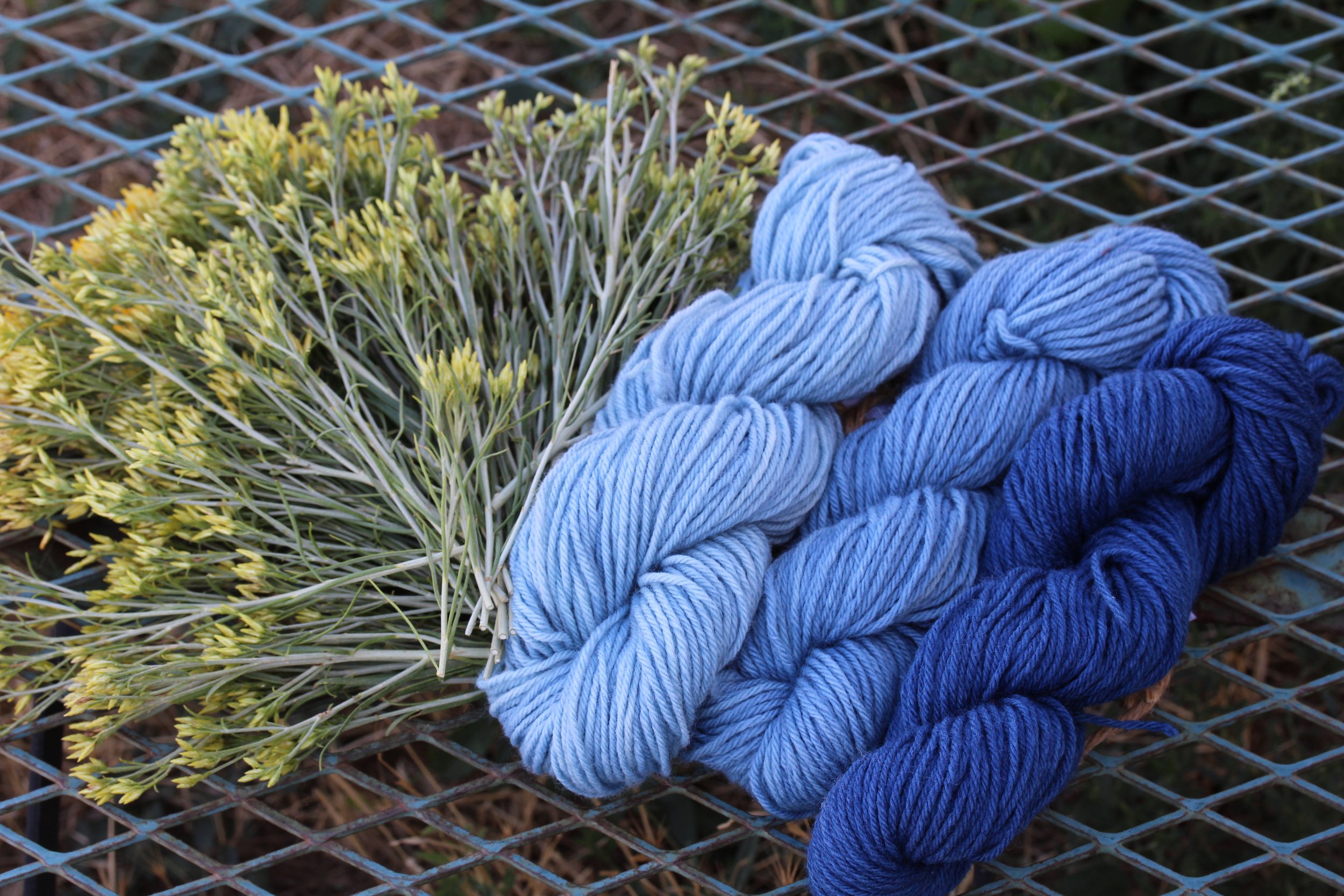
Fresh leaf indigo dyeing is such fun. There are a couple of methods I have used. One uses ice and the other salt. Because the indigo dye molecule is not water soluble, fresh leaf dyeing is more like a stain rather than the true dye you can get with a vat preparation.